

The Federal Government said it is fully committed to implementing the country’s Agenda 2050 to ensure the country attains a gross domestic product (GDP) per capita of $33,000 and brings the poverty rate down to 0.6 per cent.
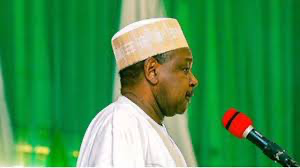
Minister of Budget and Economic Planning, Abubakar Atiku Bagudu, stated this at the media conference on the forthcoming 29th Nigerian Economic Summit (NES29).
He said the overall aim of the agenda was to increase the country’s per capita GDP, thereby transiting the economy to the highest per capita GDP among the upper-middle income economies.
The plan will be effectively implemented by successive administrations through medium-term national development plans and annual budgets, he explained.
He said the goals of Sustainable Economic Development as encapsulated in the Nigeria Agenda 2050 include a stable and predictable macroeconomic environment, adopting policies that are consistent with raising domestic savings and investment and creating an enabling and conducive business environment.
Others are achieving concentric economic diversification, achieving sustainable growth as well and promoting productivity/industrial development.
The minister said the summit has become the largest and foremost annual convergence for public sector policymakers and private sector industry leaders in the country, adding that the theme of the 29th Nigerian Economic Summit – ‘Pathways to Sustainable Economic Transformation and Inclusion’ – was chosen to discuss the imperatives of transforming the country’s economy while ensuring inclusivity.
“The discussions around the theme will be dimensioned across five sub-themes – Stimulating Economic Growth; Mobilising Finance for Sustainable Development, Harnessing Human Capital Development, Promoting National Cohesion and Inclusion and Reforming Public Institution,” Bagudu said.
He added: “Its success will depend on the active and deliberate participation of all critical stakeholders, including, the federal government, sub-national governments, private sector operators, civil society organisations, media and development partners.”
The minister said the Renewed Hope Agenda and eight priority areas of the current administration are aimed at fast-tracking the goals of the Agenda 2050 and the National Development Plan 2021-2025 with a double-digit growth rate and inclusive development as focal areas.
“The ministry is in the process of conducting the mid-term review of the NDP 2021-2025 to fine-tune the plan and ensure that the Renewed Hope Agenda of the current administration is incorporated into the NDP 2021-2025.
“The ministry will welcome innovative ideas from the stakeholders at the Summit to ensure its effective integration into the NDP 2021-2025,” he said.
Bagudu said the pathways to sustainable economic transformation and inclusiveness lie in innovative policies, robust workable institutions, strategic investments in infrastructure, upskilling human capital, encouraging entrepreneurship and innovation and leveraging digital technology.
Through targeted reforms, increased transparency and good governance, Nigeria can unlock its immense economic potential, attract foreign investments, equip our youth with the skills and resources they need to leverage opportunities and improve the quality of life for its citizens,” the minister said.
The NESG Chairman, Olaniyi Yusuf, said Nigeria is currently confronted with critical challenges that demand equitable and resilient economic development.
He said Nigeria stands at a unique juncture to chart a course towards shared prosperity and overcome long-standing obstacles that have impeded its socio-economic progress.
The summit (NES#29) is scheduled to be held from October 23 to 24 in Abuja.
Meanwhile, FG plans to increase GDP to $33,000 by 2050, says Budget Minister
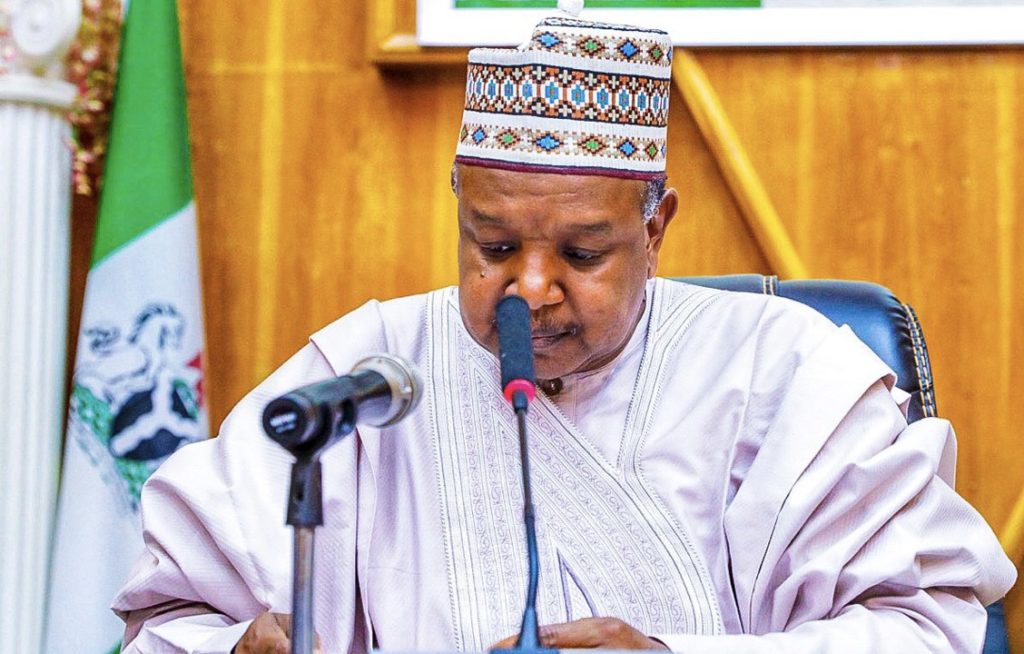
Speaking at the World Press Conference on the forthcoming 29th Nigerian Economic Summit (NES) scheduled to take place in Abuja, on October 29, Minister of Budget and National Planning, Senator Abubakar Atiku Bagudu said that the plan would
also bring poverty rate to 0.6 per cent and unemployment rate to 6.3 per cent, while transiting the economy to the highest per capita GDP in the group of upper-middle income economies.
Overall, the main target of the Nigeria Agenda 2050 is to increase the country’s per capita GDP to US$6,000 and US$33,000 by 2030 and 2050 respectively. It will also bring poverty rate to 0.6 per cent and unemployment rate to 6.3 per cent, while transiting the economy to the highest per capita GDP in the group of upper-middle income economies.
“The plan will be effectively implemented by successive governments through six number 5-Year Medium-Term National Development Plans and Annual Budgets” he said
According to the minister, the Renewed Hope Agenda and eight priority areas of the current administration are aimed at fast-tracking the goals of the Nigeria Agenda 2050 and the National Development Plan 2021-2025 with a double-digit growth rate and inclusive development.

To this effect the ministry is in the process of conducting the mid-term review of the National Development Plan (NDP 2021-2025) with the purpose of fine-tuning the plan and ensuring that the Renewed Hope Agenda of the government is incorporated into the NDP 2021-2025.
He, however, welcomed innovative ideas from the stakeholders at the summit to ensure its effective integration into the NDP 2021-2025.
In his remarks, Chairman, Nigerian Economic Summit Group, Mr Olaniyi Yusuf observed that one of
Nigeria’s pressing concerns is the need to translate economic growth into improved living standards for its citizens.
He said that despite experiencing growth over the past years, the country still grapples with rising unemployment, income disparity, and multidimensional poverty.
These challenges, according to him, are worsened by an uneven allocation of resources, macroeconomic instability, and institutional deficiencies.
“Data from the National Bureau of Statistics (NBS) in 2022 revealed that approximately 62.9 per cent of the population (i.e., 133 million people) live in multidimensional poverty, threatening the development of a vibrant middle class.
“Nigeria’s youthful population presents a tremendous opportunity for accelerating national development through entrepreneurship and innovation. With a large pool of creative and ambitious young minds, the country has the potential to foster a vibrant start-up ecosystem and drive economic growth. By leveraging technology and innovation, these creative minds can introduce disruptive solutions, create jobs, and contribute to the overall progress of the Nigerian economy” he said.
It is against this backdrop that NESG aims to focus on enhancing the role of entrepreneurship, skills and innovation, as well as sub-national and local governments, as drivers of economic growth and development.
“The ultimate objective is to foster the creation of a more inclusive, sustainable and equitable economy. The summit aims to foster collaboration among key stakeholders from diverse sectors and devise effective strategies to promote good governance at all levels of government” he explained.
✍️ Joseph Chibueze, TheSun.