
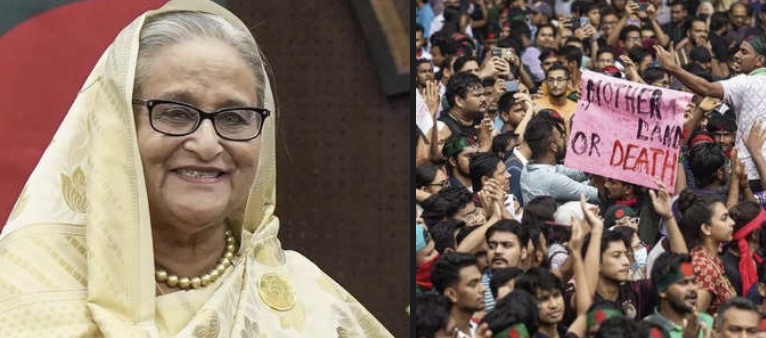

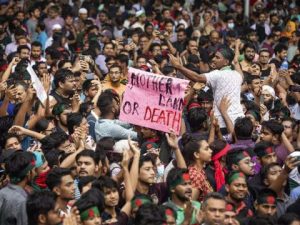
Around 300 people have died in violent protests rooted in quota protests. Anti-government protestors marched to Dhaka and stormed into the PM’s palace following a weekend of violence left dozens of people dead as the military imposed a curfew for an indefinite period and authorities cut off internet access in an attempt to stem the unrest.
Why The Protest?
Protesters are demanding that Hasina resign and are seeking justice for the scores of people killed. Since the violence began in July, nearly 300 people have died, according to local media reports. The protests, which have drawn hundreds of thousands, began in July with students demonstrating against a controversial quota system that allocated government jobs. It turned violent on July 16 as student protesters clashed with security officials and pro-government activists, until the Supreme Court stepped in to roll back the decision. A renewed wave of anti-government demonstrations carried over into the weekend, and violent clashes reignited.
Student groups now say they have just one demand: the resignation of Hasina and her Cabinet, whom they blame for the violence. Hasina has responded to the latest upheaval by accusing the demonstrators of “sabotage” and by cutting off the internet for a second time in a bid to quell the unrest. She said the protesters who were engaged in destruction were no longer students but criminals and should be handled with iron hands.
Bangladesh Prime Minister resigns, flees as protesters storm palace

Bangladesh’s Prime Minister Sheikh Hasina has resigned and fled the country following weeks of deadly protests in the South Asian country.
Ms Hasina, who ruled the country for close to two decades, boarded a military helicopter on Monday, an aide told Al Jazeera, as huge crowds ignored a national curfew to storm her palace in Dhaka.
Her resignation came after 300 people died in weeks of protest that the authorities sought to crush. A night of deadly violence on Sunday killed close to 100 and a curfew was called.
On Monday, soldiers patrolled the streets. However, protesters remained defiant and called for a march on Dhaka as crowds swelled in the capital.
Dozens of people have been killed and hundreds injured as anti-government protests swept over the past weeks. Local newspaper Prothom Alo, said at least 95 people, including at least 14 police officers, had died on Sunday in the violence.
The death toll was the highest for a single day from any protests in Bangladesh’s recent history, according to Reuters news agency.
Huge numbers stormed the prime minister’s palace on Monday, preventing Ms Hasina from delivering a speech. By early afternoon, the mood on the street had turned to one of celebration after the news of the Prime Minister’s departure spread.

Protests began last month after student groups demanded the scrapping of a controversial quota system in government jobs.
The demonstration has now escalated into a campaign to remove Ms Hasina, who won a fourth straight term in January in an election boycotted by the opposition.
The prime minister said the protesters who engaged in “sabotage” and destruction were no longer students but criminals, and that people should deal with them with iron hands.
The government announced a holiday from Monday to Wednesday. Courts were to be closed indefinitely, while mobile internet services were cut off, and Facebook and messaging apps, including WhatsApp, were inaccessible.
Culled from AFP