


Following the depreciation of the Nigerian currency(Naira) in the past few months, further setbacks have hit the West African market region’s local currency as trans-border traders have started rejecting the currency.

Money changer Taiye Ekiti attributed the depreciation of the Naira in Benin Republic and other countries, such as Togo and Ghana, to the cost of the US dollar. He further stated that bureau de change employees are no more powerful than other businesspeople in this regard.
According to research, traders on both sides of the Seme border now either the CFA or the national currency of the non-francophone nations.
Due to the significant amount of trade that existed between those nations and Nigeria, the naira previously dominated the sub-region as the primary currency that was accepted as a means of exchange by traders across borders.
Within each nation’s unofficial payment systems, the Nigerian Naira was treated as convertible.
Research however showed that the Nairs started to lose that standing in February and reached the point of complete rejection in March 2024.
Nigerians were among the traders whom Vanguard spoke with. They bemoaned the fact that owning Naira has grown extremely risky due to the currency’s continuous decline, which began last year and reached its worst rate of depreciation last month.
According to official reports, the value of the Naira fell rapidly in 2023, falling to N1/0.9CFA in the second quarter and N1/0.8CFA in the third, from its trading level of above N1/1.5CFA in the first quarter.
Following a period of relative stability throughout the fourth quarter of 2023, it opened in January 2024 at N1/ 0.66067CFA.
But after a second wave of depreciation in February, the sub-regional fortune fell sharply to N1/0.38308CFA, and last week it reached a new low of N1/0.37595CFA.

Even though there has been a tiny improvement over the past few days, the traders are already insuring against additional devaluation.
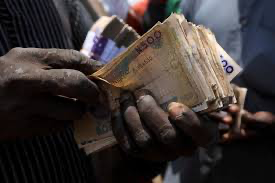
The Naira is still far from what it was a few years ago in the subregion, though. The cost of commodities imported into Nigeria through the economies of West Africa is being negatively impacted by the trend. As a result, traders are reporting a slowdown in commercial activity in both the Nigerian and Beninian border towns.
The majority of the money changers, or bureau de change, in the border markets in Benin and Nigeria that I visited did not have Nigerian currency on display like they did the previous year.
Culled from Opinion Nigeria